

A stark division – between celebration and mourning, between vindication and dread – captures the profound national schism that has come to define American democracy.
In coffee shops, Uber rides, and family dinner tables across the country, conversations hover between exuberance and despair.
Trump supporters speak of “taking their country back” while opponents worry about the very foundations of democratic governance.
The truth, as often happens in American politics, likely lies somewhere in the complex middle – though that middle ground seems increasingly difficult to locate.
As Trump prepares for his 2025 presidency, let’s examine 4 trends that exemplify what this moment truly represents for America’s political future, and what it means for citizens across the ideological spectrum:
Trend # 1
The Plutocratic Shift
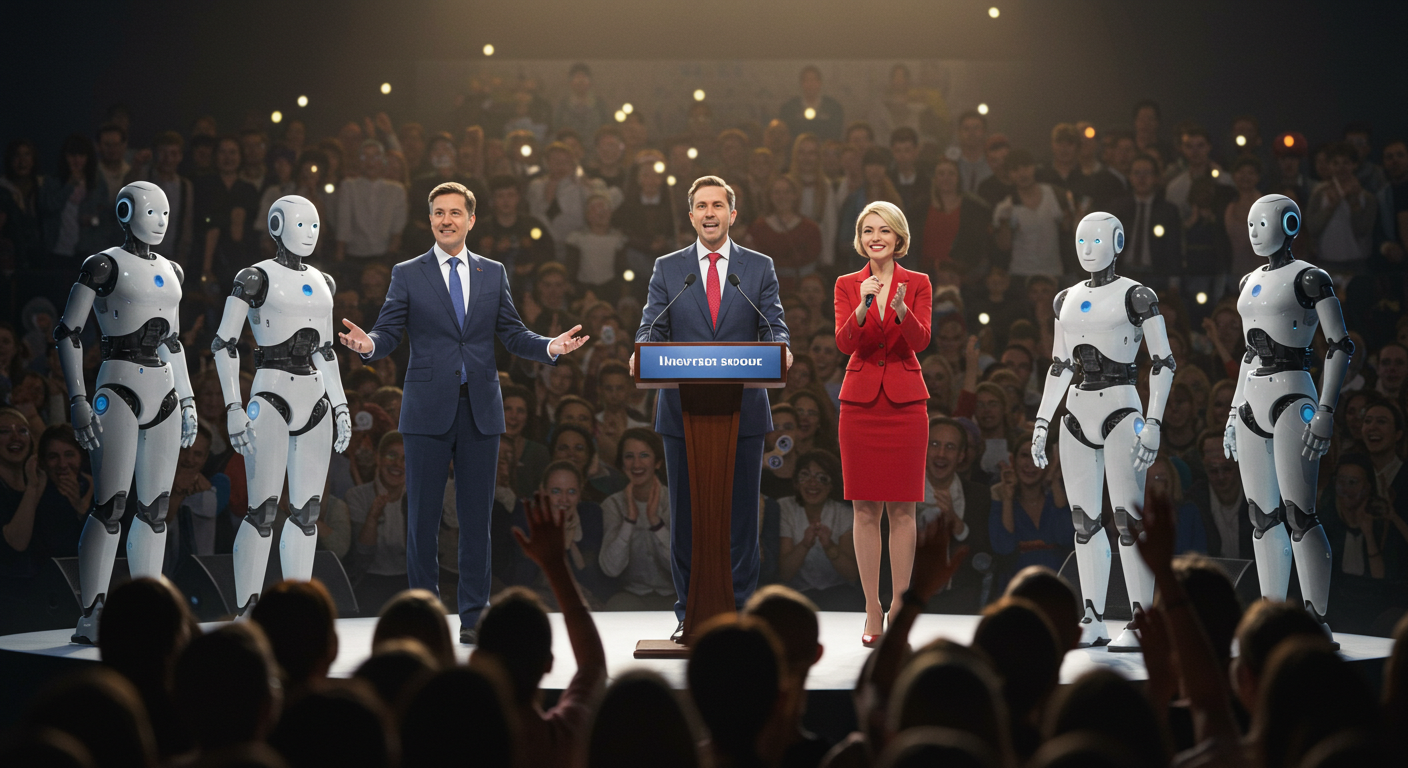
The concept of plutocracy – rule by the wealthy – has manifested through the appointment of ultra-wealthy individuals to key cabinet positions. This mirrors historical patterns where economic elites gain direct political control rather than just exercising influence through lobbying.
Trump’s administration includes more billionaires than any other in American history, with a combined net worth that exceeds the GDP of 172 different countries.
The plutocratic trend in Trump’s second administration is characterized by:
Unprecedented wealth concentration: Trump’s cabinet and top appointees collectively have a net worth exceeding $460 billion, far surpassing previous administrations.
Direct control by economic elites: Instead of merely influencing policy through lobbying, billionaires now hold positions of direct political power and decision-making authority.
Alignment of government priorities with wealthy interests: This concentration of wealth in the administration is likely to result in policies that primarily benefit the ultra-rich, potentially exacerbating income inequality.
This plutocratic trend is detrimental to American democracy, as it concentrates power in the hands of a wealthy elite, undermining the principle of equal representation.
Middle-class voters who supported Trump are unlikely to benefit from plutocratic control, as policies tend to favor the ultra-rich at the expense of the broader population.
This pattern mirrors two historical examples:
The Roman Republic, where a small wealthy elite ruled over the majority (133 BC-27 BC). This period of increasing elite control ultimately led to the collapse of the Republic, as formerly authoritative institutions lost their credibility and authority.
The Gilded Age in the United States (1876-1900), during which income inequality soared and political corruption flourished. United States subsequently addressed the extreme wealth disparity and political corruption through progressive reforms such as antitrust legislation, labor protections, and social welfare programs aimed at reducing income inequality and curbing corporate power.
Why Does Any Of This Matter?
As in the Roman Republic’s decline and the Gilded Age’s rampant inequality, today’s plutocratic shift threatens to create a two-tiered society where the wealthy elite dictate policies that serve their interests, while the middle and working classes face economic stagnation and diminished political influence.
This concentration of power in the hands of the few not only undermines democratic principles but also risks societal instability, as history has shown that extreme wealth disparities often lead to social unrest and the erosion of the very institutions that once fostered a thriving middle class.
Statistics to know:
- The wealth gap in the US has widened dramatically, with the top 10% of households now holding 67% of total household wealth, while the bottom 50% own only 2.5% as of the second quarter of 2024.
- The collective net worth of America’s top 12 billionaires surpassed $2 trillion by the end of 2024, increasing by more than $1.3 trillion (193%) since March 2020.
Plutocratic systems often maintain popular support through what’s called “aspirational identification” – where citizens support policies benefiting the wealthy because they imagine themselves eventually joining those ranks.
This psychological mechanism helps explain why such systems can remain stable even while increasing inequality.
Trend # 2
The Tech-Political Complex

Silicon Valley has shifted from its traditional liberal leanings, backing away from its historied partnership with the Democrat Party.
Now we see the alliance between Trump and big tech solidified, marking a significant shift in Silicon Valley’s political landscape and power.
Most recently, major tech platforms have subtly adjusted their algorithms and content moderation policies to favor establishment narratives, aligning with the new political reality.
For example, certain political keywords or topics might be automatically pushed lower in your feed, while other perspectives get highlighted more frequently.
They’ve also changed how they flag or label certain types of posts, making some viewpoints seem more ‘official’ or ‘authoritative’ than others.
Fact-checking has taken a hit as well, where these systems will apply stricter scrutiny to claims challenging establishment positions.
For example, Mark Zuckerberg has expressed frustration with Democratic policies, particularly regarding content moderation, warning Republican-led committees about over-censorship.
The reshaping of American political culture through this alliance is likely to result in a more controlled and manipulated information environment.
Average people may find it increasingly difficult to access unbiased information, form independent political opinions, and engage in meaningful democratic discourse.
The tech-political complex could potentially create a system where technology subtly but significantly influences political beliefs, eroding the foundations of a truly democratic society.
What we will see is the reduction of individual agency in forming political opinions and the blurring of lines between genuine political conviction and technologically induced beliefs.
This shift in the tech industry’s approach to content moderation and political alignment is starkly illustrated by the unprecedented attendance of tech leaders at Trump’s 2025 inauguration on January 20.
Notable figures present include:
Elon Musk, who has been tapped to explore ways to cut federal spending.
Jeff Bezos, whose company Amazon donated $1 million to the inauguration fund.
Mark Zuckerberg of Meta, which also contributed $1 million.
Shou Chew of TikTok, despite previous tensions with the Trump administration.
Sam Altman of OpenAI and Tim Cook of Apple.
The shift can be attributed to several factors:
Regulatory Concerns
Tech companies are aligning with Trump to potentially influence policies that affect their industries.
One example of tech companies aligning with Trump to influence policies is the potential rollback of Biden-era AI regulations. Major tech firms are supporting Trump’s stance on reducing regulatory oversight of AI development.
This could lead to the rapid deployment of potentially unsafe or biased AI systems in everyday applications, from social media algorithms to automated decision-making in finance and healthcare, which may negatively impact privacy, job security, and fair treatment for the average person.
Economic Opportunities
The alliance offers potential benefits for more government contracts.
As noted previously, Trump’s administration is expected to prioritize AI innovation and reduce regulatory oversight, as evidenced by the appointment of David Sacks as the White House AI & Crypto Czar and the planned repeal of Biden’s Executive Order 14110 on AI regulations.
This approach is likely to create lucrative opportunities for tech companies in government contracts, especially in areas like cybersecurity and IT services through increased use of Government-Wide Acquisition Contracts (GWACs).
These contracts are designed to streamline the procurement process for information technology products and services across government agencies.
This approach can lead to faster adoption of new technologies in government agencies while providing tech companies with expanded access to the lucrative federal marketplace.
Ideological Shifts
Some tech leaders have embraced more conservative viewpoints, seeing an opportunity to reshape power dynamics in favor of less restrictive entrepreneurship, meaning fewer government regulations and interventions that can limit business growth.
This alignment allows tech leaders to shape policies that benefit their business interests.
Many Silicon Valley figures see potential self-interests in aligning with conservative politics, including lower capital gains taxes, favorable interest rates for investments, and competition rules that allow profitable startup exits (meaning more financial gains for startup founders, investors, and shareholders after a sale of a company).
Trend # 3
The MAGA Marketing Phenomenon
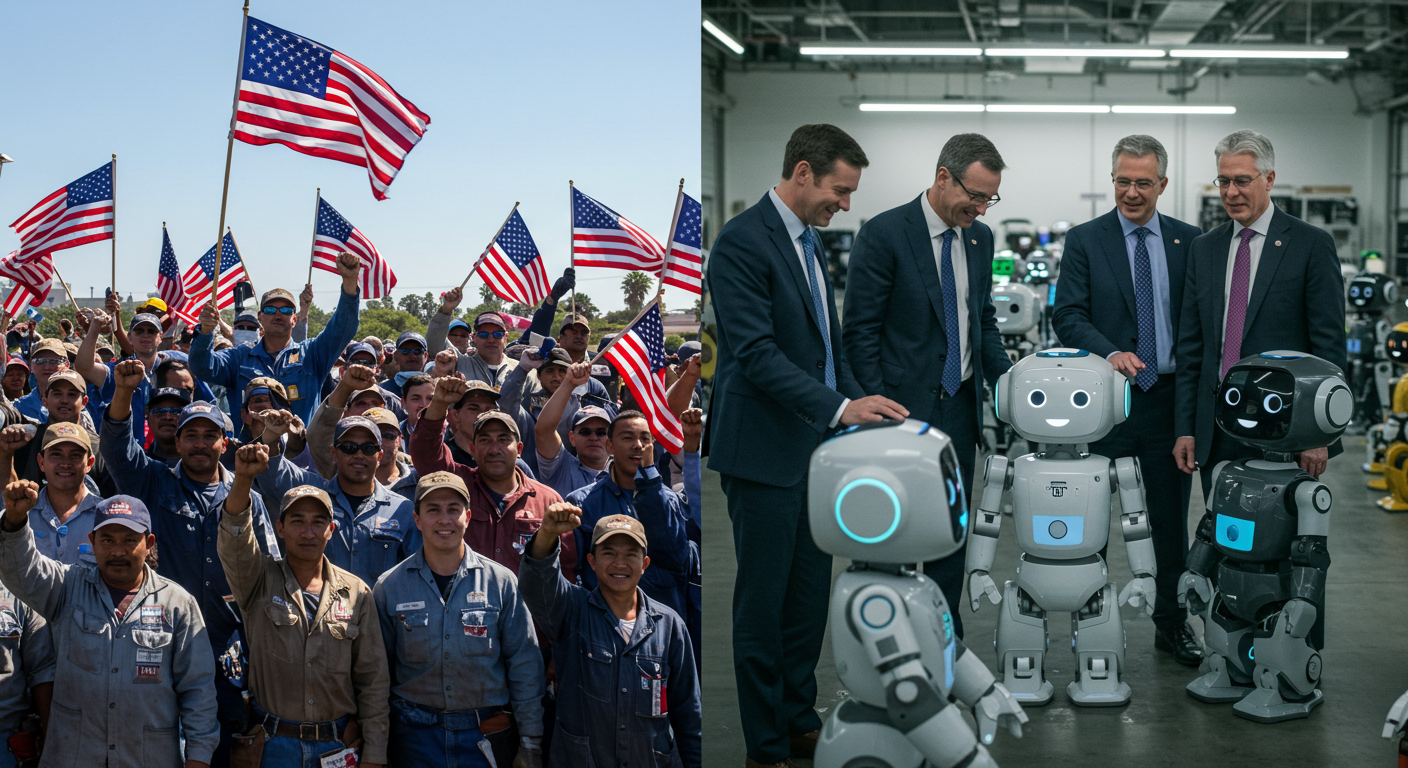
The brilliance of “Make America Great Again” lies in its psychological architecture: it provides both a grievance (things aren’t great now) and a promise (we can return to greatness).
This message resonates across economic classes by tapping into what sociologists call “status anxiety” – fear of losing social position.
The slogan works as what linguists call a “floating signifier” – it means different things to different people while maintaining emotional punch.
Its effectiveness stems from its ability to tap into deep-seated emotions and anxieties while offering a simple, yet potent promise.
Two examples of why the MAGA marketing is so powerful and addicting to mass audiences:
Nostalgia and Identity
This nostalgia taps into people’s desire for a perceived simpler, more prosperous time, even if it’s largely imaginary. It provides a shared identity and a sense of belonging to a movement larger than oneself.
Politicians may distort or romanticize the past to create a false narrative that supports their own agenda. This can lead to misinformation and the suppression of important historical events or facts.
The Nazis used propaganda to create a cult of personality around Hitler, portraying him as a messianic leader who would redeem Germany.
This nostalgic appeal resonated deeply with many Germans who felt disoriented and alienated in the aftermath of World War I, which brought upon dire economic crisis.
In times of national crises, this rhetoric makes people feel good – they have a powerful outlet for frustrations that usually stem from emotional grievances, rather than allegiance to right-wing political ideology.
Threat Perception and Protection
The slogan implicitly suggests that America’s greatness is under threat, which aligns with the beliefs of many Trump supporters.
Threat can mean many things to different people, including feelings of threats to one’s own social status. Trump’s slogans build deep emotional safety by people attaching to powerful notions of national identity, providing a social appeal that eases personal insecurities.
The ultimate appeal of Trump’s political branding lies in its ability to create a strong emotional resonance while offering simple solutions to complex problems.
It taps into feelings of anger, hope, and nostalgia, creating a deep emotional connection with his base.
Interlaced with nationalist branding and policies, a continuing of this trend may include the weakening of checks and balances, the delegitimization of opposing viewpoints, and the potential for civil unrest.
Historical precedents show that such emotional manipulation can pave the way for authoritarian rule by convincing a significant portion of the population to prioritize a strongman leader over democratic processes in order to restore the country to its former glory.
Trend # 4
The Populist Realignment

The most fascinating aspect of America’s modern political culture is how right-wing populism has successfully co-opted the economic grievances once championed by the Bernie Sanders movement.
While both sides spoke about rigged systems, the right-wing version added cultural grievances about immigration and social change that proved more emotionally compelling to many voters.
The right-wing populist movement under Trump successfully took control over feelings of economic grievances by blending them with cultural anxieties, creating a potent political message.
Two key examples of how the Right under Trump co-opted populist ideas to win political power:
Immigration and Economic Insecurity
Trump’s campaign effectively linked immigration to economic concerns, tapping into voters’ anxieties about job competition and wage pressures.
By framing immigration as both a cultural and economic threat, Trump mobilized economically insecure voters who might have otherwise been drawn to left-wing economic populism.
Anti-Establishment Rhetoric
Trump positioned himself as an outsider fighting against a corrupt elite, echoing themes from left-wing populism but adding a cultural dimension.
This approach appealed to voters who felt distrustful of traditional institutions and the political system, believing those institutions did not represent their interests, leading to isolation in their cultural grievances.
Many felt Progressive policies were keeping them socially and economically ‘left behind,’ but did not have an outlet to voice their outlook.
Additionally, by promising to “drain the swamp,” Trump channeled anti-establishment and anti-elite sentiment into support for his right-wing agenda.
To state simply, while left-wing populism focused primarily on economic grievances, right-wing populism under Trump offered a narrative that combined economic, cultural, and institutional critiques.
A powerful mix for voters who felt unheard, economically marginalized, and culturally threatened.
But the populist realignment presents challenges to American politics.
Protectionist policies and anti-establishment sentiment could lead to significant changes in economic policy and international trade relationships.
This means that protectionist policies, such as broad-based tariffs, could lead to higher consumer prices, increased inflation, and potential trade wars, resulting in reduced economic growth and disrupted global supply chains.
Simultaneously, rising anti-establishment sentiment fueled by economic uncertainty may drive support for more populist movements, creating domestic instability as voters seek to punish perceived elites by embracing nationalist political parties, which usually leads to conflict in international affairs.
This is because nationalist parties often promote aggressive foreign policies, exacerbate cultural and ethnic tensions, and prioritize national interests over international cooperation.
We Are In A Very Uncertain World, Built By Billionaires And Algorithms

President Trump’s return to the White House in 2025 ushers in a period of heightened global uncertainty and economic upheaval.
The world he inherits is significantly more volatile than in 2017, with ongoing conflicts in Ukraine, increasing tensions with China over Taiwan, and nuclear threats from North Korea and potentially Iran.
Trump’s unconventional approach to foreign policy, combined with his protectionist economic stance and skepticism towards international cooperation, could lead to unpredictable shifts in global alliances and trade relationships.
The proposed imposition of new tariffs on allies threatens to ignite trade wars, potentially leading to increased consumer prices and economic instability.
The global economy faces significant challenges, including the risk of recession, inflation concerns, and growing economic divergence between nations.
This divergence is particularly stark between the US and China, as Beijing and Moscow accelerate efforts to create an alternative financial system centered around the yuan and BRICS currencies, directly challenging the US dollar’s long-standing position as the world’s reserve currency.
Domestically, his plans to reshape key institutions like the Environmental Protection Agency (EPA) and Department of Education, along with potential rollbacks of climate policies and changes to immigration laws, may cause significant economic disruptions.
His aggressive stance on immigration, including plans for mass deportations, could disrupt labor markets and industries reliant on immigrant workers.
Mass deportations would create labor shortages in key industries like agriculture and construction, leading to higher wages and increased production costs.
These costs would inevitably be passed on to consumers.
Even domestically produced items could become more expensive as U.S. manufacturers face less competition and can raise prices.
This isn’t just another political transition – it’s a fundamental shift in how America engages with both its own institutions and the wider world.
It’s all applause and pageantry right now but prepare for a volatile environment in the coming years.
 Report On The Nation