

Are Tech Oligarchs Systematically Undermining The Authority Of Governments Worldwide?
They don’t need tanks. They don’t need votes. They just need APIs.
In the 20th century, power flowed through borders, armies, and the slow churn of democracy.
Today, it’s rewritten in lines of code, whispered in closed-door deals between CEOs and fragile states, and enforced by digital infrastructure the average citizen doesn’t even know exists.
Welcome to the era of shadow sovereignties—where Big Tech isn’t just influencing nations.
It’s becoming them.
The Accidental Empire Builders
What started as Elon Musk’s Mars fantasy has become the de facto space program for Western civilization.
When Russia invaded Ukraine, it wasn’t NATO satellites providing crucial communications—it was Starlink terminals shipped faster than government aid packages.
Tech companies aren’t storming government buildings; they’re simply building better mousetraps while the old ones fall apart.
As former Pentagon official Chris Lynch puts it, “We’ve outsourced critical infrastructure to a guy who tweets memes at 3 AM.”
But here’s the kicker: it’s working.
When Silicon Valley Becomes Sovereign
1. SpaceX: The Unofficial Space Force
Elon Musk didn’t just disrupt the auto industry—he rewrote the rules of geopolitical influence.
When Ukraine’s internet was crippled by Russian attacks (2022), Starlink became the de facto communications ministry, restoring connectivity faster than NATO or the UN.
Why this changes everything:
- No oversight, no transparency. Just one man’s discretion shaping a nation’s survival.
- A private CEO—not a president or general—decided which Ukrainian cities stayed online during war.
“This isn’t just corporate philanthropy—it’s corporate sovereignty,” says Ian Bremmer, president of Eurasia Group.
“Musk effectively decided which regions stay connected in a warzone. That’s power historically reserved for superpowers.”
The precedent is set: The next global crisis won’t be managed by states. It’ll be outsourced to a boardroom.
2. Google & Digital ID: The Privatized Passport
In India, Google Pay and Aadhaar (a biometric ID system built with tech giant help) have become de facto citizenship tools.
No ID? No bank account, no healthcare, and no way to prove you exist.
Why this should terrify you: When identity is a corporate product, your rights expire with your login. Lose access? You’re erased from society. Disagree with a policy? Your account—and your ability to work, travel, or protest—vanishes overnight.
“We outsourced trust to algorithms,” warns Shoshana Zuboff, author of The Age of Surveillance Capitalism.
“When a corporation controls identity, democracy becomes a subscription service.”
The consequence? A world where citizenship is a revocable license—and Silicon Valley holds the ‘delete’ button.
3. AWS’s Sovereign Cloud: The Data Colonialists
Amazon Web Services now rents “sovereign clouds” to governments—marketing privacy while quietly centralizing global power.
The brutal irony? The same company that ships your toilet paper also hosts the world’s most sensitive military, health, and census data.
“AWS is the new East India Company,” warns a former Pentagon official. “They don’t need an army when they own the servers.”
Why this is dangerous:
- Fake Sovereignty: Countries pay AWS for “control” of their data—while relying on Amazon’s code, hardware, and secret backdoor agreements with US intelligence.
- The New Colonialism: No gunboats required. Just lock nations into your ecosystem, then charge rent for their own infrastructure.
The future is already here: If Amazon’s cloud fails, so do entire governments
The New Power Map: Corporations vs. Nation-States

Think of it as a game of Monopoly where someone quietly bought all the utilities while everyone else was fighting over Boardwalk.
Today, Big Tech controls:
Digital Infrastructure: AWS, Google Cloud, and Microsoft Azure host more government services than most countries can manage internally. It’s like renting your nervous system from a private company.
Communications Networks: Starlink now provides internet to remote regions faster than local telecom companies. In some conflict zones, Elon Musk’s satellites are literally the only link to the outside world.
Financial Systems: Payment processors like Stripe handle more cross-border transactions than many central banks. PayPal has more active users than most countries have citizens.
Identity Verification: Google’s authentication systems verify more identities daily than passport offices process in months. Facebook’s “real name” policy affects more people than most national ID requirements.
As tech policy expert Cathy O’Neil warns, “We’ve created digital nation-states with CEOs as unelected kings. The question isn’t whether this is happening—it’s whether we can live with the consequences.”
The Great Debate: Savior or Shadow Government?
Tech Utopians (Web3 Libertarians) Say:
“Governments are outdated OSes/Operating Systems. Tech moves at iteration speed; democracy moves at dial-up.”
But scratch beneath the surface, and the picture gets murkier.
These aren’t decentralized utopias—they’re highly centralized corporate structures making decisions that affect billions without any democratic input.
It’s less “power to the people” and more “power to the people with the best algorithms.”
Policy Realists Counter:
“Unchecked corporate power isn’t innovation—it’s feudalism with better Wi-Fi.”
Consider the implications:
- If Starlink decides to cut service to a region, entire populations lose internet access.
- If AWS has an outage, government services in multiple countries go dark.
- If payment processors blacklist a country, its economy can collapse overnight.
Case Study: The AWS Nation
Want to see the future?
Look at Estonia.
This Baltic nation of 1.3 million has essentially become a beta test for digital governance.
Nearly everything—voting, healthcare, banking, education—runs on digital platforms that would make Silicon Valley proud.
But here’s the twist: much of it runs on foreign cloud infrastructure.
Estonia may be the world’s most advanced digital nation, but its digital sovereignty sits on Amazon’s servers in Ireland.
Former Estonian president Kersti Kaljulaid (2016-2021) acknowledges the irony:
“We’ve achieved digital independence by depending on American tech companies. It’s sovereignty through interdependence—if that’s not an oxymoron.”
The Conflict Zone Laboratory

Perhaps nowhere is this shift more visible than in active conflict zones, where traditional government has completely broken down.
Ukraine: After Russia’s invasion (2022), Starlink terminals arrived faster than international aid.
Afghanistan: After the Taliban takeover (2021), crypto networks provided financial services when traditional banking collapsed.
Lebanon: When the banking system collapsed (2019), crypto exchanges processed more daily transactions than the country’s remaining banks.
But what happens when business interests’ conflict with strategic goals?
The growing power of tech giants poses a worrying threat to global security and military strategy.
Just as Elon Musk restricted Starlink access during Ukraine’s offensive, a CEO like Jeff Bezos could cripple a nation’s defenses with a few keystrokes by limiting access to Amazon’s cloud infrastructure.
When unelected tech leaders hold this kind of influence over critical digital assets, they gain an alarming degree of control over the geopolitical chess board – undermining the sovereignty of democratic governments and creating a new paradigm where the future of nations hinges on the business interests of Silicon Valley.
The Accountability Black Hole
Traditional governments, for all their flaws, have mechanisms for accountability: elections, courts, constitutional limits, and public records.
Tech companies answer only to shareholders and market forces.
The result is a strange hybrid world where your voting rights are protected by constitutional law, but your digital rights are governed by terms of service agreements you’ve never read.
The Democratic Dilemma
But here’s the central tension: efficiency versus accountability.
Tech companies can move fast and break things because they don’t have to deal with public hearings, environmental reviews, or constitutional constraints.
They can also break democratic norms just as quickly.
Consider how quickly social media platforms can amplify or suppress political movements —one algorithm tweak can make a protest trend worldwide… or vanish overnight.
Example:
During Myanmar’s 2021 coup (Myanmar’s military overthrew the democratically elected government, sparking nationwide protests), Facebook briefly banned the hashtag #HearTheVoiceOfMyanmar to “reduce tensions,” inadvertently silencing pro-democracy organizers while military propaganda flourished.
A single content moderator’s decision became de facto censorship.
The consequences were devastating: pro-democracy organizers (who relied heavily on social media for chats/information sharing) found themselves unable to coordinate protests or share evidence of military atrocities, while the military’s information warfare continued unimpeded.
In a country where Facebook essentially is the internet for millions of users, corporate moderation policies became the difference between successful resistance organizing and digital silence.
Corporations as Countries: The Blueprint for a Tech-Run Future
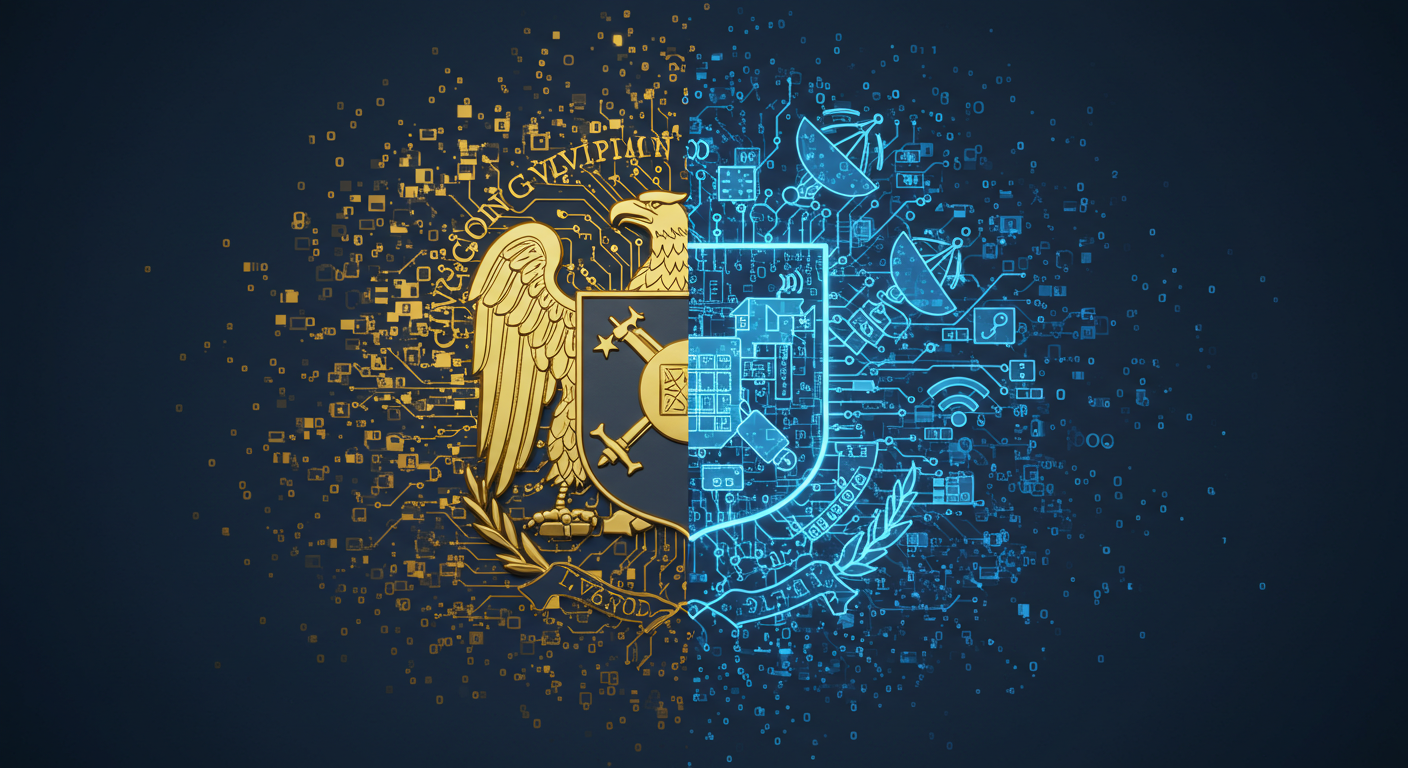
We’re not quite at full-blown “Corporations as Countries”—but we’re closer than you think.
These experimental city-states and private enclaves are rewriting the rules of governance, with tech as the ultimate architect.
- Neom (Saudi Arabia): A $500 billion “smart city” megaproject backed by Saudi sovereign wealth. Promises AI-run public services, drone taxis, and a 170km-long mirrored skyscraper
- Prospera (Honduras): A private city with its own legal system, built by Silicon Valley libertarians. Companies act as de facto governments—setting taxes, regulations, and even courts.
- The Seasteading Institute (Floating Cities): Founded by Peter Thiel-backed futurists who believe nations should compete like apps. Imagine offshore micro-states with crypto economies, AI judges, and zero income tax.
These aren’t just billionaire playgrounds—they’re beta tests for a new world.
The Silicon Coup’s End Game
The question isn’t whether tech companies are replacing government functions—they already have.
The question is whether we can build accountability mechanisms to match their power or whether we’re comfortable with a world where democracy is a legacy system.
As former Google executive and current AI researcher Fei-Fei Li puts it: “We’re not just building better technology—we’re building the infrastructure of power for the next century. The stakes couldn’t be higher.”
We stand at a crossroads that previous generations couldn’t have imagined: surrendering democratic oversight for digital efficiency or clinging to accountability while the world moves on without us.
Today, the battle lines aren’t being drawn in legislatures—they’re buried in API docs and end-user license agreement updates.
Because when your bank account, your job applications, and your ability to communicate all depend on corporate algorithms, ignorance isn’t bliss—it’s dangerous.
🚀 Want the Data?
Get the full Country Risk Index 2025 to see which nations are most vulnerable to tech-driven governance shifts.
 Report On The Nation